
How Hilton Captured the Solo Travel Market: A Strategic Case Study
- Britnee Johnson

- Aug 26, 2025
- 7 min read
Updated: Feb 17
This reflection is my own expert perspective—unsponsored and entirely independent.

Lessons from a $130B hotel group that saw the opportunity before competitors—and what boutique properties can learn from it.
While most luxury hotel groups were still designing for couples and families, Hilton identified a seismic market shift and acted on it strategically.
According to Hilton's 2025 Travel Trends Report, nearly 50% of global travelers now journey solo. Gen Z (55%) and Millennials (51%) lead this movement, transforming solo travel from niche accommodation into a dominant hospitality segment.
Hilton didn't just acknowledge this trend—they redesigned operations across 8,600 properties to capture it.
The result? Category leadership in a market most luxury brands are still treating as an afterthought.
Here's what they did—and what boutique properties can learn from it.
The Market Intelligence That Drove Strategy
Hilton's 2025 Travel Trends Report revealed critical data points that informed their operational pivot:
Market size and growth:
50% of global respondents frequently travel solo
Gen Z (55%) and Millennials (51%) are significantly more likely to travel alone than older generations
Solo travel is now the default, not the exception, for younger luxury travelers
Behavioral insights:
64% of solo travelers consider a good book their favorite travel companion—signaling preference for autonomy over forced social programming
25% of solo travelers bring pets, representing an untapped service opportunity
Digital privacy and seamless check-in processes rank higher in importance than social amenities
The strategic insight: Solo travelers aren't couples minus one person. They have distinct operational needs, different spending patterns, and higher loyalty potential when properties design for them intentionally.
Hilton's Operational Response: What They Changed
Rather than treating solo travelers as an accommodation challenge, Hilton implemented system-wide design changes:
1. Dining Redesign
The problem: Traditional restaurant layouts force solo diners into awkward two-top tables, often near kitchens or high-traffic areas.
Hilton's solution:
Installed odd-numbered bar seating with ocean or garden views
Created flexible table configurations that don't assume pair dining
Trained staff to recognize solo dining as intentional, not incomplete
Eliminated assumptions ("Is someone joining you?") from service protocols
Revenue impact: Solo diners who feel comfortable stay longer, order more courses, and return more frequently.
2. Digital Key Technology
The insight: Solo travelers value privacy and autonomy from arrival through departure.
Hilton's implementation:
Digital Key app with 14M+ downloads
Contactless check-in and room access
Eliminates front desk interaction for guests who prefer it
Provides seamless arrival experience without social navigation
Operational benefit: Reduced front desk congestion while increasing guest satisfaction scores among solo travelers.
3. In-Room Experience Controls
The approach:
Integrated room controls for lighting, temperature, entertainment
Created customizable ambiance options
Provided autonomy over environment without staff intervention
The psychology: Solo travelers want complete control over their space. Hilton designed for self-sufficiency rather than constant service touchpoints.
4. Pet-Friendly Infrastructure
The data point: 25% of solo travelers bring pets, with year-over-year searches for pet-friendly stays doubling.
Hilton's response:
Expanded pet-friendly policies across properties
Created pet amenities and services
Recognized pets as travel companions, not accommodations
Market capture: This positioned Hilton ahead of competitors who still treat pet travel as niche.




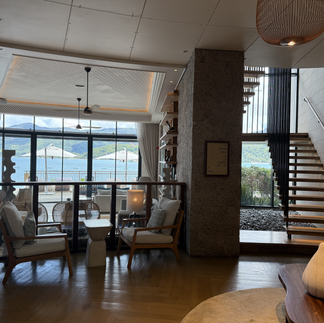


Case Study: Mango House Seychelles as Solo Travel Blueprint
To understand how these principles translate into luxury positioning, Mango House Seychelles—part of Hilton's prestigious LXR Hotels & Resorts collection—provides a operational model.
Strategic Positioning
Property overview:
41 rooms (intimate scale prioritizes experience over volume)
Former private residence of fashion photographer Gian Paolo Barbieri
Part of LXR portfolio, selected for distinctive design, personal service, and exclusive experiences
Located on Mahé Island's southern coastline
Why this matters: LXR properties are positioned at Hilton's luxury apex. The decision to design one specifically for solo traveler appeal signals strategic confidence in this segment's profitability.
Design Decisions That Serve Solo Travelers
Accommodation architecture:
All 41 spaces oriented toward ocean views (privacy + natural beauty)
Four-poster beds, private balconies, in-room espresso bars (self-sufficiency)
Bathrooms designed as private retreats (rainfall showers, local handmade soaps)
Technology integration (seamless controls, entertainment options)
The operational insight: Solo travelers will pay premium rates for spaces that feel designed for one rather than adapted from couple-focused rooms.
Dining Infrastructure: Five Venues, Zero Forced Interaction
Rather than one restaurant with limited options, Mango House offers variety without social pressure:
Muse — Italian-Seychellois fusion for breakfast, lunch, dinner
Azido — Japanese-inspired dining with ocean backdrop
Moutya — Authentic Creole cuisine in beachside setting
Kokoye — Signature bar with sunset cocktails and rum tastings
Soley — Poolside bar with international spirits
Strategic value: Solo travelers can choose mood, cuisine, and atmosphere daily without feeling limited or conspicuous. This variety drives longer stays and higher food & beverage revenue.
Wellness and Experience Design
Anpe Spa (Creole for "at peace"):
Treatments using local ingredients (coconut oil, sea salt, native herbs)
Signature coconut-charcoal facial
Individual-focused rituals (no couples packages as default)
Three infinity pools with distinct atmospheres:
Main Pool: sweeping bay views, daybeds, restorative pace
Eye-Shaped Pool: lively energy near bar, beach access
Cliff House Pool: shaded seclusion, ideal for reading and reflection
The design principle: Solo travelers seek variety in mood and setting. Multiple pool options allow self-paced experiences without staff direction.
Additional amenities:
Technogym-equipped fitness center
Personalized yoga sessions
Excursions (jungle hikes, yacht charters) structured for solo participation
Day access to sister property Canopy House Seychelles
Operational advantage: These offerings create upsell opportunities while maintaining solo traveler autonomy.
Accessibility Considerations
Infrastructure:
Main building with ramps and elevators
Buggy service for mobility support
Wheelchair-accessible King Deluxe Room with lowered beds, accessible controls, grab bars, emergency pull cords
Why this matters: Solo travelers with accessibility needs have fewer compromises to make when traveling without companions. Properties that design for this capture loyalty.
Sustainability as Brand Differentiator
Energy-efficient lighting systems
Comprehensive waste reduction programs
Local conservation support partnerships
Strategic positioning: Eco-conscious solo travelers—particularly Millennials and Gen Z—prioritize properties with demonstrated sustainability commitments.
Revenue Implications: What Hilton Gained
While specific property-level revenue data remains proprietary, Hilton's continued investment in solo traveler infrastructure signals profitability.
Measurable indicators:
1. Market leadership in fastest-growing segment Hilton now owns mindshare among solo travelers researching luxury accommodation. When travelers search "best hotels for solo travel," Hilton properties dominate results.
2. LXR portfolio differentiation Mango House distinguishes itself within Hilton's luxury collection specifically through solo traveler design—a competitive moat other LXR properties don't possess.
3. Repeat booking patterns Solo travelers who find properties designed for them demonstrate higher loyalty rates. They're not comparison shopping—they're returning to known environments.
4. Premium pricing sustainability Properties can maintain higher ADR (Average Daily Rate) when solo travelers perceive value alignment rather than accommodation.
5. Operational efficiency Solo travelers require less coordination, fewer service touchpoints, and minimal group logistics—resulting in higher margins per occupied room.
Lessons for Boutique Properties: You Don't Need Hilton's Scale
Boutique operators can implement these principles without enterprise infrastructure.
What You Can Do Immediately (30-60 Days)
Dining adjustments:
Audit current table layouts and seating for solo comfort
Train staff to eliminate assumptive questions ("Will someone be joining you?")
Create bar seating or window-facing single tables with views
Offer self-paced dining options (no rushed service)
Booking experience:
Review website imagery—does it exclusively show couples/groups?
Update copy to signal solo traveler welcome without calling it out awkwardly
Implement mobile check-in if feasible
Eliminate or reduce single supplements
Room design:
Audit welcome amenities—do they assume two guests?
Provide in-room coffee/tea service (autonomy over room service calls)
Ensure quality reading lights, comfortable seating for solo relaxation
Offer streaming entertainment options
Medium-Term Strategic Investments (90-180 Days)
Experience programming:
Partner with local guides for one-on-one cultural experiences
Develop solo-friendly excursions (no minimum two-guest requirements)
Create wellness offerings designed for individual practice
Build quiet zones in public spaces (reading nooks, observation areas)
Marketing repositioning:
Develop solo traveler messaging without making it a "special category"
Highlight design elements that serve autonomy and privacy
Create content demonstrating solo guest experiences
Leverage reviews from solo travelers in marketing materials
Staff training:
Educate teams on solo traveler psychology
Teach recognition of cues (guest reading = preference for quiet)
Implement service protocols that respect boundaries without creating distance
Long-Term Differentiation (6-12 Months)
Proprietary programming:
Develop signature solo traveler experiences unique to your property
Create partnerships with local artisans, chefs, naturalists for exclusive access
Build solo traveler loyalty program or membership tier
Design seasonal programming specifically for solo guests
Infrastructure evolution:
Consider room count and property scale in future development
Evaluate dining venue diversity (can you add a second option?)
Assess pool/wellness space design for solo-friendly zoning
Where Boutique Properties Have Competitive Advantage
You can outcompete Hilton in areas that matter most to solo travelers:
1. Personalization at scale With fewer rooms, you can provide deeper individual attention and recognition.
2. Local authenticity Independent properties offer cultural immersion chain hotels can't replicate.
3. Flexibility and customization You can adapt experiences in real-time based on individual guest preferences.
4. Intimate atmosphere Solo travelers often prefer smaller properties where they feel known without being overwhelmed.
5. Owner/operator connection Direct relationships with ownership create trust and loyalty.
The Competitive Reality
Hilton proved the solo travel market is profitable at enterprise scale. For boutique operators, this validates the opportunity—but also signals urgency.
The brands that capture solo traveler loyalty now will own this segment for the next decade.
Properties still designing exclusively for couples and groups are competing for a shrinking share of the market while the fastest-growing, highest-spending segment walks to competitors.
The Bottom Line
Hilton's strategic response to solo travel demonstrates that designing for this segment isn't niche positioning—it's revenue strategy.
Their operational changes—dining redesign, digital privacy tools, pet-friendly policies, experience autonomy—created category leadership while competitors dismissed solo travelers as accommodation challenges.
For boutique properties, the lesson is clear: You don't need Hilton's budget to implement these principles. You need strategic intent.
The solo travel market hit $482 billion in 2024 and is projected to exceed $1 trillion by 2030. The properties that design for this segment now—with operational intelligence, not surface-level marketing—will define luxury hospitality's next era.
The Greatest Assist partners with luxury hotels and boutique properties to design solo traveler revenue systems and operational frameworks. Our proprietary assessment identifies where your property is losing solo traveler bookings—and how to capture them strategically.
If you're ready to lead your market in solo travel capture, not follow competitors, let's talk.
About the Author
Britnee R. Johnson Luxury Solo Travel Strategy Consultant | Founder & CEO, The Greatest Assist | Hospitality Revenue Architecture & Operational Design
FEATURED IMAGES BY BRITNEE JOHNSON/THE GREATEST ASSIST & WETU
Comments